
Article Summary: An Asia REIT-style look at how Bai Jingting’s GOODBAI expanded from footwear and apparel into coffee and IP derivatives, and how collaboration strategy, pricing, and PR incidents affected the brand.
Asia REIT perspective: How Bai Jingting’s GOODBAI does cross-category business
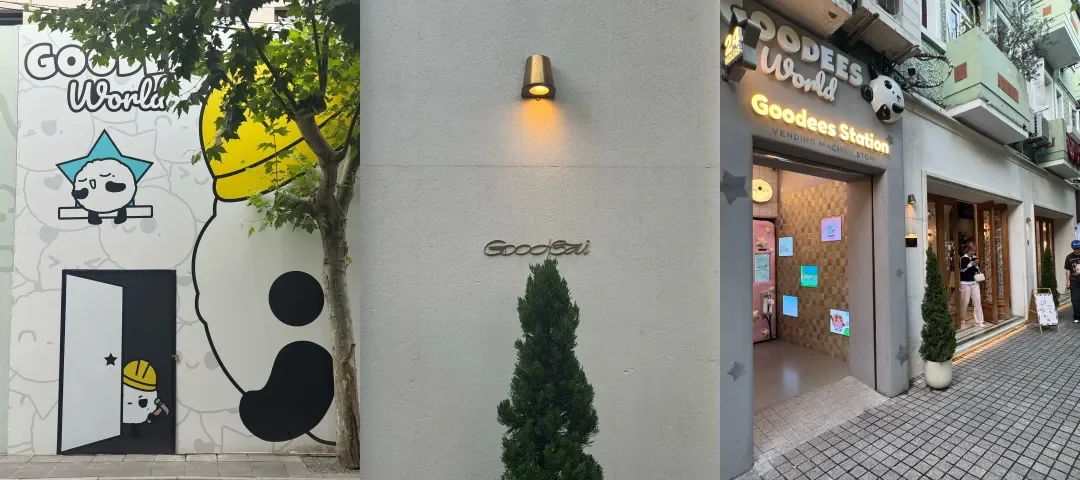
Recently, a huge fence quietly went up along Shanghai’s Yanqing Lane, carrying the GOODEES WORLD brand. This is the first national store of a sub-line under GOODBAI, the brand run by well-known actor Bai Jingting. Not far away are his coffee shop, clothing store, and 24-hour vending machine.
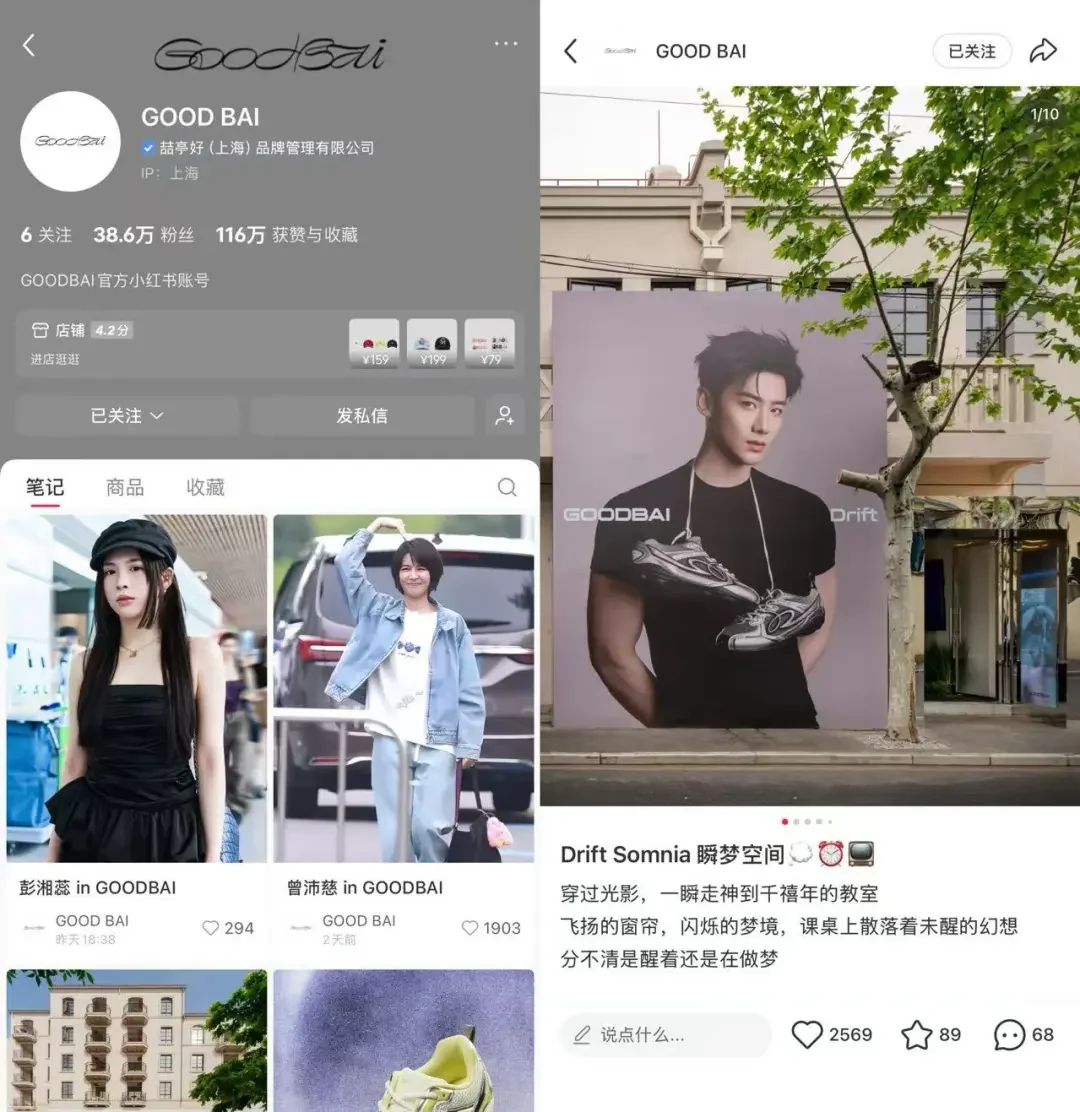
Two months earlier, GOODBAI had already opened a pop-up space there, and Bai Jingting’s giant poster drew countless check-ins. As a result, Yanqing Road was once called “Bai Jingting’s pain street.” There are many celebrity founders, but in terms of business ecosystem, channel building, and expansion pace, Bai Jingting can be counted among the most business-savvy bosses in Chinese entertainment.
The white-collar boss selling clothes, coffee, and plush toys: multiple products rank in the top ten on Tmall charts, with collaborations with Salomon, New Era, and others.
The five-bay townhouse along Yanqing Road is GOODBAI’s first physical store nationwide. The brand was founded in 2021 and is a clothing and lifestyle brand created by actor Bai Jingting. When GOODBAI opened in 2023, it once sparked long lines and scalper reselling, with some people waiting nearly 7 hours.
Even three years later, on an ordinary weekday afternoon the store is still bustling, with many customers shopping, trying on items, and taking photos.
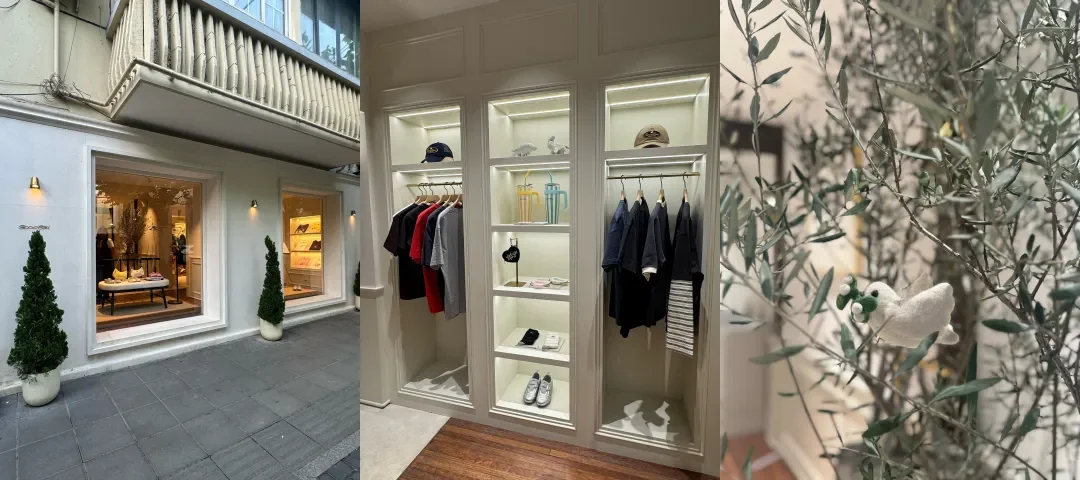
The store design is retro yet minimalist, with Bai Jingting fan elements everywhere. In terms of categories, GOODBAI covers clothing, shoes, hats, bags, and accessories. Compared with other celebrity streetwear brands, GOODBAI is not too expensive, generally ranging from RMB 39 to RMB 2,900. For example, most of its T-shirts are priced at RMB 199, shoes are mostly RMB 159 to RMB 799, and canvas bags, hats, and jewelry are mostly in the tens to a few hundred yuan range.
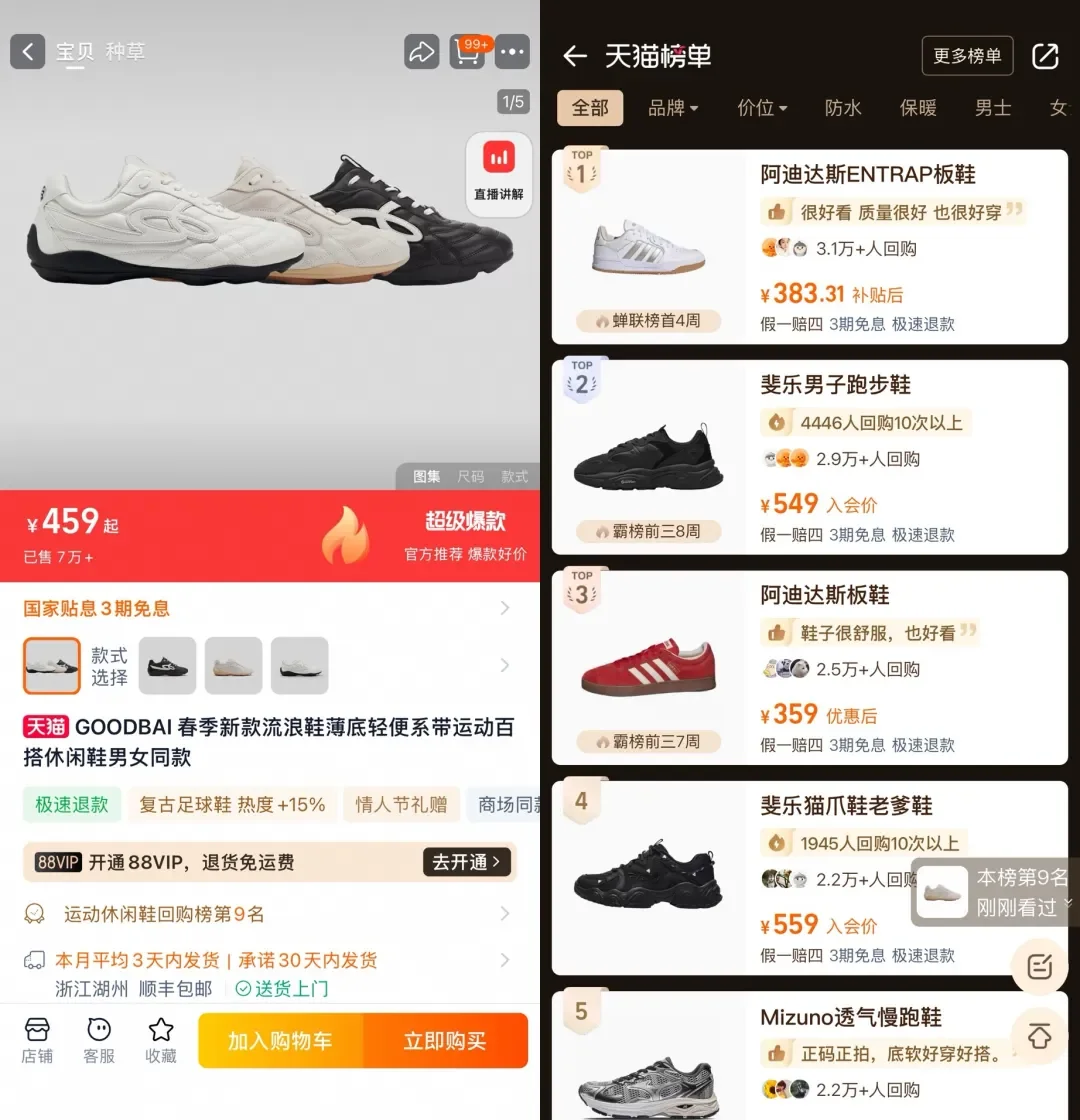
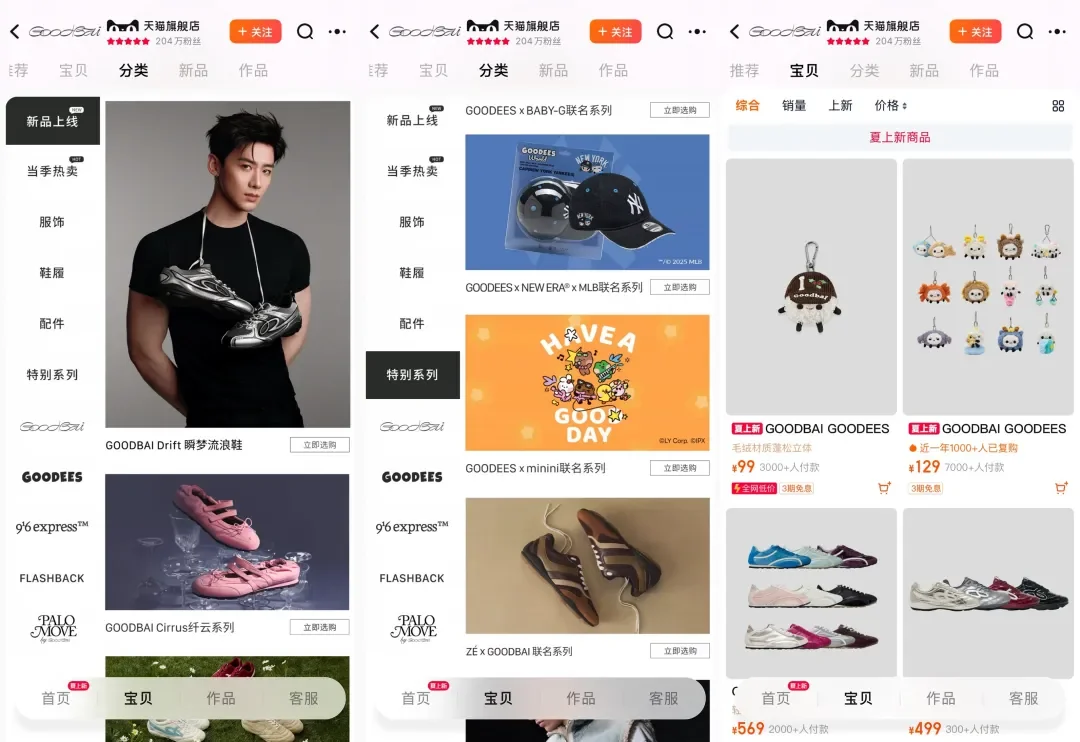
One of GOODBAI’s breakout products is the “wandering shoe,” priced at RMB 459, which ranks No. 9 on Tmall’s sports-casual shoe repurchase list. The shoes ahead of it come from sports giants and well-known brands such as Adidas, FILA, Anta, Asics, and Xtep. That ranking to some extent reflects GOODBAI’s influence.
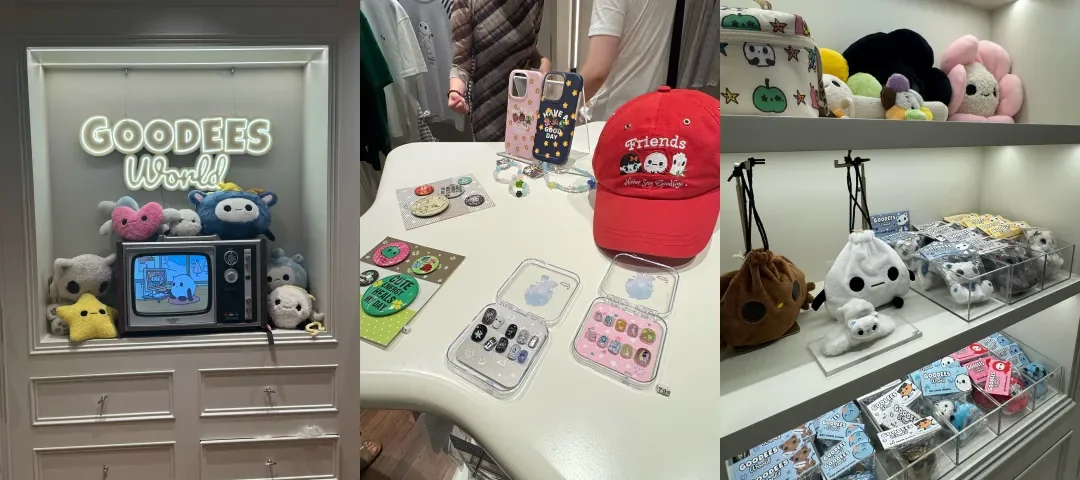
GOODEES WORLD, which is about to open its first store, also has a dedicated area inside the shop. This sub-line comes from its original IP, the fluffy character shown on the fence. Unlike GOODBAI’s relaxed sporty style, GOODEES WORLD is positioned as “cute, warm, and healing,” with products such as shoes and apparel, phone cases, plush charms, and hair accessories. In its Tmall flagship store, the RMB 129 twelve-zodiac plush charms have sold more than 7,000 units; meanwhile, the RMB 99 baseball-cap keychain at the Yanqing Road vending machine is already sold out.
Since its launch, GOODBAI and its sub-lines have released collaborative products with many brands, such as Salomon, Diptyque, New Era, Levi’s, BABY-G, Holiland, and Line Friends minini. The roster includes today’s hottest middle-class favorites as well as mass-market brands and streetwear labels, covering a wide range.
Beyond shoes, apparel, and IP derivatives, the White Boss’s business map also includes coffee roasting.
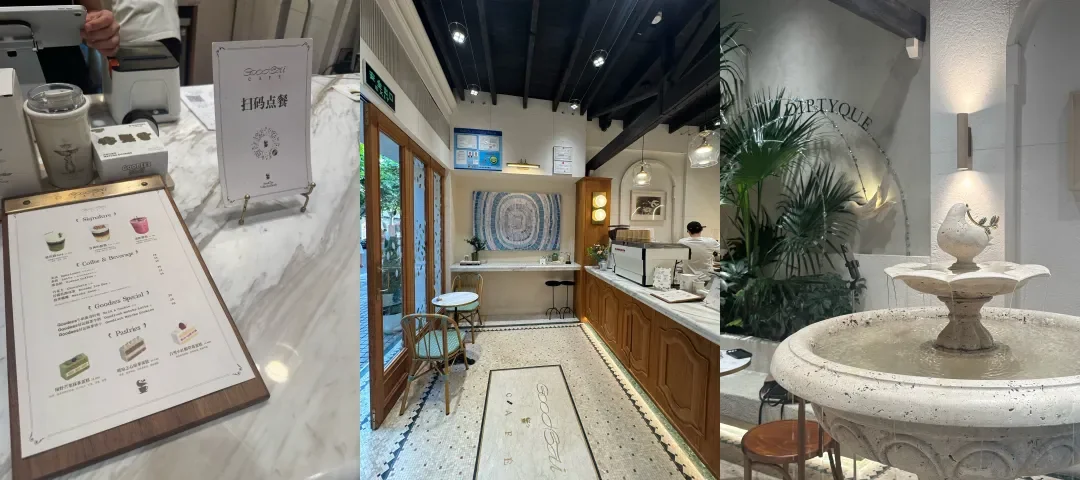
Not far from the GOODBAI Yanqing Road store is Bai Jingting’s coffee shop. A cup of coffee is priced at RMB 28–48, similar to other specialty coffee shops in Shanghai. In 2024, the RMB 21 price for two “GOODEES Big Satisfaction” cookies sparked online debate.
Outside Yanqing Road, GOODBAI has opened two more physical stores in Chengdu and Aranya, and has launched pop-up and slow-pop-up stores in Beijing, Paris, South Korea’s Seoul, and other places. In addition to its own online and offline channels, GOODBAI has also entered some multi-brand stores, such as Musinsa, sometimes called the “Korean Uniqlo.” From shoes and apparel to coffee and IP products, Bai Jingting is building an entire consumer ecosystem centered on young people’s lifestyles.
Running the channels with a “product matrix + collaborations + pop-ups” model: from footwear to broader lifestyle
In the entertainment industry, many celebrities create brands. Edison Chen has CLOT, Jackson Wang founded TEAM WANG, Daniel Wu started selling coffee, and Hua Chenyu launched his own personal care brand this year. Why are celebrities so keen to create their own brands?
Bai Jingting once said in an interview with Mr. Bazaar that Maugham compared fame to someone giving you a string of pearls, and Bai often wondered, “Can I find another string of pearls like that?” Brands like GOODBAI are the second string of pearls Bai Jingting found for his own sense of security.
Celebrity brands naturally have traffic advantages, and their rise resembles many emerging apparel brands today: social-media seeding, pop-up store testing, and opening a first store in a core commercial district. The difference is that celebrities and their friends are walking seeding machines—for example, many stars have appeared publicly wearing GOODBAI products.
Risks from public opinion and quality feedback: from notices and recalls to fixes
But celebrity-created brands often fall into accusations of “scamming fans,” or simply fade away. At the same time, because the brand is deeply tied to the celebrity, it is easy to end up with a situation where the brand rises and falls with the person.
GOODBAI has also faced negative public opinion over product quality. In 2024, the Shanghai market regulator announced that a denim jacket from the brand failed to meet the mandatory national pH standard in testing; in 2025, a RMB 599 sweatshirt was reported to have a peeling print, with the back graphic transferred onto a car seat. After the incident was exposed, the brand’s affiliated company issued an apology, announced a recall of the relevant batches, and promised improvements.
From sports and outdoor to niche segments: expanding with professional teams and a multi-brand matrix
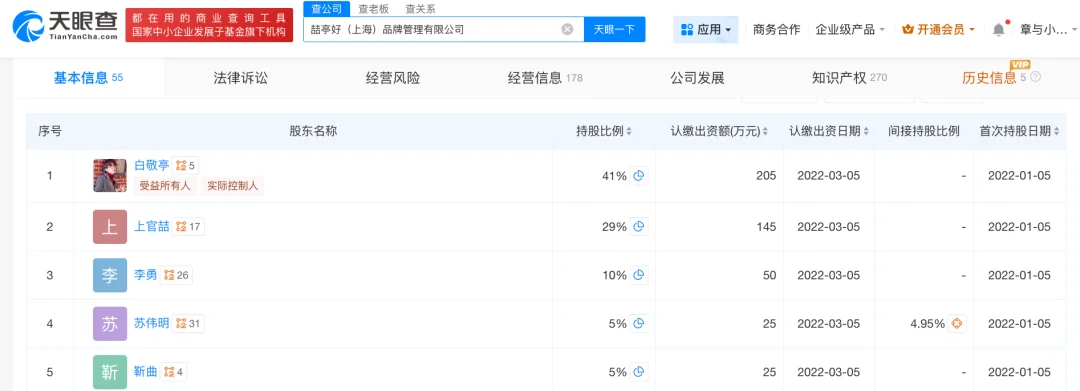
It is worth noting that the GOODBAI affiliated company, Zhetinghao (Shanghai) Brand Management Co., Ltd., is held by Bai Jingting, Shangguan Zhe, and Li Yong with stakes of 41%, 29%, and 10%, respectively. Shangguan Zhe, a designer, founded a brand that once appeared at London Fashion Week, and Li Yong has also worked deeply in the apparel industry for many years. So Bai Jingting’s footwear and apparel business actually brings in industry insiders, with some professional support in design, production, and supply chain.
From Bai Jingting’s personal perspective, he is known in entertainment as a “shoe king” and loves many sports. He is also the endorser for sports and outdoor brands such as New Era and Salomon. As sports demand becomes more segmented and diversified, GOODBAI has also gradually developed niche apparel lines such as football (916 express) and tennis (polomove).
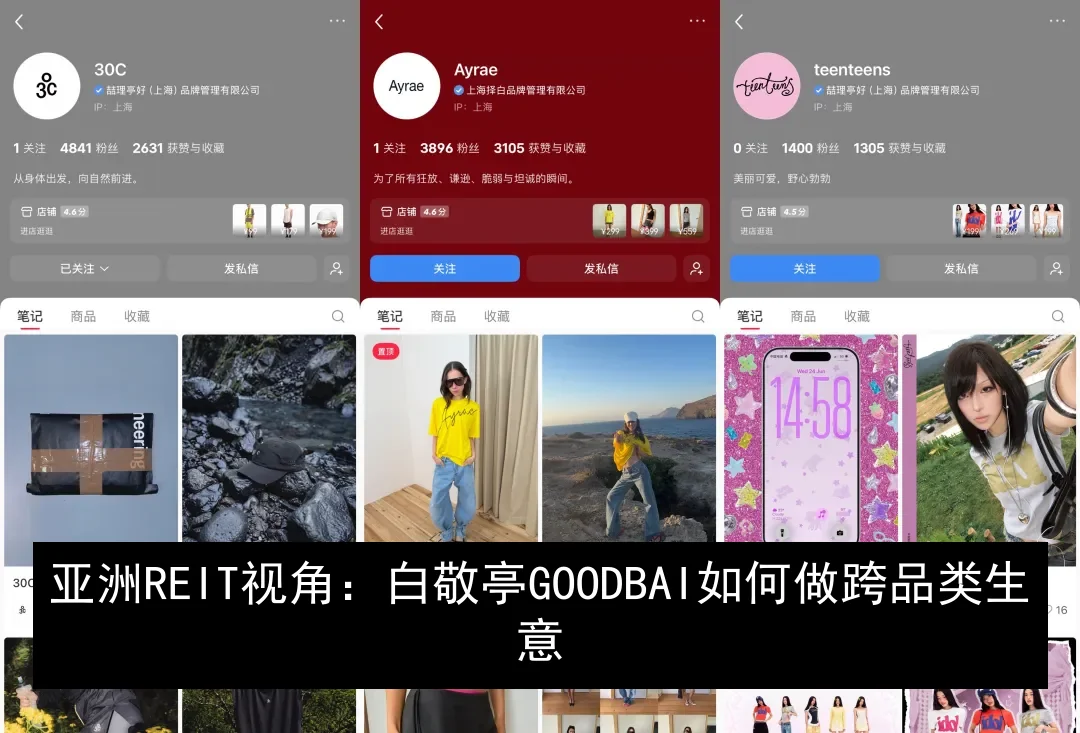
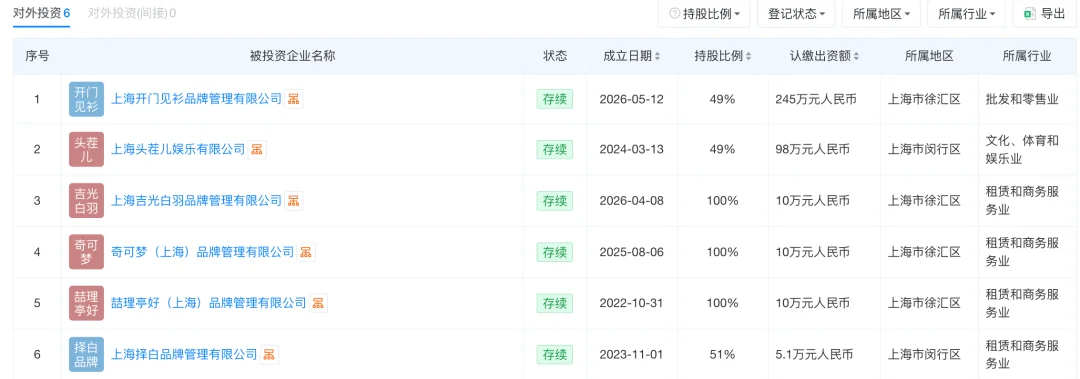
Besides the relaxed sports style of GOODBAI, the affiliated companies also include teenteens for young women, the women’s fashion brand Ayrae, and the trendy outdoor brand 30C. Taking 30C as an example, it chose to enter the outdoor trend through a fashion-forward style, which fits today’s broad outdoor consumption demand and its own design strengths. 30C has already opened a store on Xiaohongshu, and Bai Jingting’s same-style vest has sold out in multiple sizes.
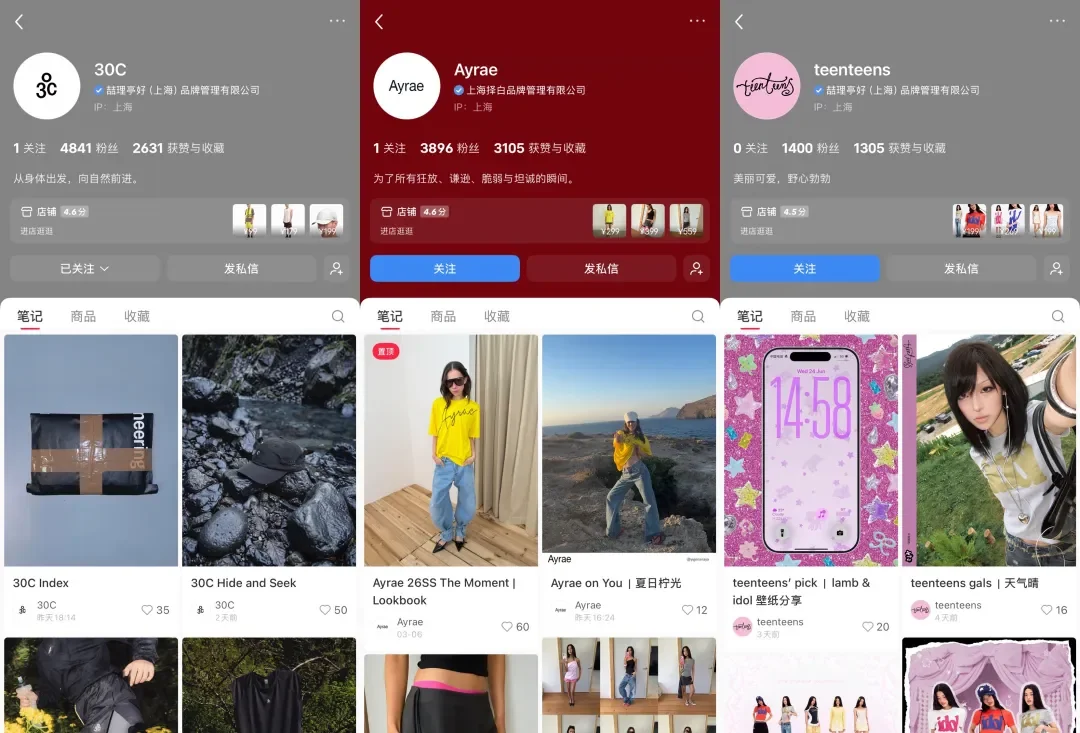
In fact, from hit sporty shoes to trendy IP plush toys and now broader outdoor categories, Bai Jingting’s every step has basically landed on trend. From that perspective, the White Boss’s business success is clearly not just luck and traffic.
From the collaborations mentioned above, some brands already had cooperation with Bai Jingting as an artist. In truth, the biggest fear for a celebrity brand is becoming just merchandise. How to move beyond fan economics into a broader market may be exactly what Bai Jingting’s various brands are doing now—and will need to keep doing in the long run.
As Bai Jingting put it, “Even if it is separated from me as a person, consumers still recognize it, and many people will still like it and think it looks good. That is my final goal.”