
Article Summary: New Fed Chair Warsh faces his first policy meeting; market focuses on whether the dot plot fades, forward guidance weakens, and rate hike signals gradually emerge. Rising inflation, solid employment, and market expectations for a year-end rate hike are driving higher interest rate volatility risk.
Preview of Fed's Warsh Debut: Dot Plot May Fade, Rate Hike Signals Strengthen
The Fed's quarterly "dot plot" of interest rate forecasts may soon lose its last rate cut signal, or even the entire chart itself could be eliminated. Then the market will have to judge whether Warsh is truly the inflation hawk he claims to be.
The new Fed chairman is preparing for his first policy meeting later this month and listening to staff briefings. Any guidance he provides on the policy direction will not yield a simple answer.
The astonishing growth of AI investment and the energy price surge from the three-month Iran war have pushed inflation well above target. Combined with internal divisions within the FOMC, futures market sentiment has notably tightened, with expectations that the Fed's next rate hike could come before year-end.

In recent months, one of the few remaining arguments for doves was that the labor market might show cracks, which AI-related layoffs or energy-related production cuts could exacerbate. But there is almost no sign of that.
Instead, the job market appears strong and possibly even improving. April job openings surged, and May private sector payrolls added 122,000 jobs, exceeding expectations. The May national nonfarm payrolls report, due Friday, will test this trend.
The Fed will not raise rates this month, but it may plant seeds for a rate hike.
Besides any signals from Warsh's press conference, the market will closely watch whether the Fed's previous statement hinting at a bias for another rate cut is removed. At the last meeting, three board members voted to delete that language, and since then, at least one former dove (Waller) has joined them.

But the Fed policymakers' quarterly economic projections, including the "dot plot" forecasting future interest rates, could become the focus.
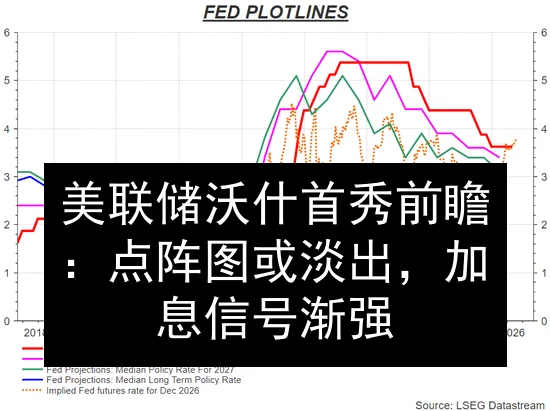
The current median projection is for one more rate cut this year and another in 2027.
Statements from Fed officials since March suggest that this year's rate cut expectation is likely to disappear from the dot plot. Whether 2027 will see a rate cut, or even a rate hike as markets expect, might have the biggest impact.
Chart: Fed dot plot projection changes

Of course, ironically, Warsh's disdain for so-called forward guidance may lead him to abolish the dot plot entirely. He would have many supporters, including his predecessor Powell, who still serves as a Fed governor.
If the prospect of further easing is excluded, guidance is stopped, and the market is left to judge based on newly released data, the interest rate market could become tighter and more volatile in the second half.
Of course, some investors still hope that the eventual end of the Iran war will bring easing back on the table, or that the impact of energy tightening on real income will be enough to suppress household demand and control other prices.
But many believe the tide has turned.
Rate Cut Plans Halted Abruptly
SGH Macro economist Tim Duy believes the inflationary consequences of rising energy prices now dominate the impact on economic growth, and as the Fed begins to realize that last December's rate cut was a mistake, the FOMC's stance is rapidly shifting.
"Fed officials realize the risk of inappropriate monetary policy is increasing, and they are quickly turning hawkish to pave the way for rate hikes," he said.
"The old Warsh would have raised rates earlier," he added, referring to Warsh's long-standing reputation as a monetary hawk. "No one knows which version of Warsh will take the stage."
Despite headwinds from energy, geopolitics, and tariffs, the economy and stock market continue to heat up amid the AI investment boom, leading many to question why the Fed would consider easing again.
Warsh's rethinking and adjustment may deviate from many people's expectations.