
Article Summary: Fed keeps rates unchanged and signals a rate hike this year; new Chair Warsh emphasizes restoring price stability, downplays dot plot and forward guidance; US Treasuries fall, dollar rises after meeting; Asia-Pacific and global markets see increased volatility.
Fed Holds Steady but Sends Hawkish Signals; Warsh Downplays Forward Guidance
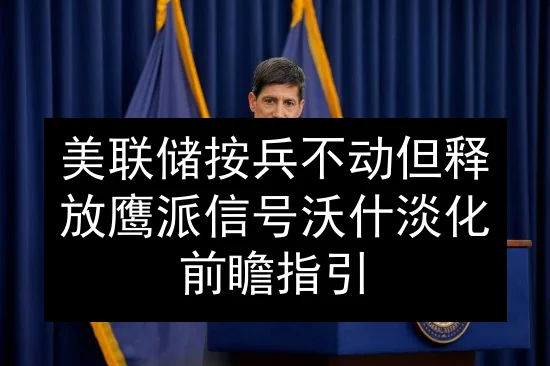
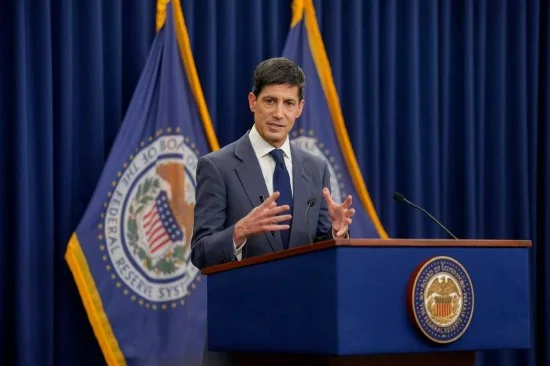
After his first policy meeting as Fed Chair, Kevin Warsh said the central bank will prioritize restoring price stability. Earlier, Fed officials decided to hold rates unchanged while signaling support for a rate hike this year.
Warsh said at the press conference that persistently high prices are a burden on Americans, but the past does not necessarily determine the future; the FOMC is committed to achieving price stability.
He also downplayed the importance of colleagues' latest rate forecasts. The dot plot shows 9 of 19 officials expect at least one 25-basis-point rate hike this year, with 6 expecting at least two; another 9 expect rates to remain unchanged or be cut.
Warsh said other officials are also not confident in their forecasts, with many acknowledging high uncertainty about the economic outlook. When asked about the rate debate at this meeting, he said the committee had a 'healthy internal debate.'
The new chair, a longtime critic of forward guidance, also said he personally refused to submit rate forecasts.
The FOMC voted unanimously on Wednesday to keep the federal funds rate target range at 3.5% to 3.75%.
After the announcement, U.S. Treasuries sold off, the dollar rose, and stocks fell. After Warsh's press conference, traders saw a 100% probability of a rate hike by October.
FOMC Statement
The post-meeting statement showed officials saying inflation remains elevated and reiterated their commitment to achieving price stability.
They continued to describe economic growth as 'solid' and noted strong productivity growth and capital investment. The statement was more concise than previous ones, which may signal future changes given Warsh's pledge to reform the Fed's communication strategy.
Warsh promised to drive 'institutional change' at the central bank when he took office last month. In his opening remarks, he announced the formation of multiple working groups to evaluate five areas of Fed operations and study possible reforms.
These working groups will study communication mechanisms, the balance sheet, the Fed's use and reliance on existing data sources, productivity and employment, and the central bank's 'inflation framework.' Warsh said the groups will include external experts and be supported by Fed staff.
When asked, he ruled out revisiting the 2% inflation target. He said he sees no reason to discuss the issue before proving the Fed's ability and determination to achieve 2% inflation.
Policymakers made several adjustments to the March economic forecasts: the median inflation forecast for this year was raised from 2.7% to 3.6%, and the 2026 core inflation forecast from 2.7% to 3.3%.
At the same time, officials lowered the median 2026 GDP growth forecast from 2.4% in March to 2.2%; their median unemployment rate forecast for end-2026 was cut from 4.4% to 4.3%.
When asked about the Fed's decision to hold rates steady, Trump told reporters in France on Wednesday, 'Fine, whatever works.' When asked about potential rate hikes, Trump said they would only hurt the U.S. economy and are very abnormal. But he added: 'Now we have a very good person over there, and I'll respect his thoughts.'