Article Summary: Yinhe Microelectronics resumed trading with a 20CM limit up after announcing a share issuance to acquire 100% of Hengtaike and raise matching funds. Integration risks and valuation uncertainty attract attention; market chasing amid risks.
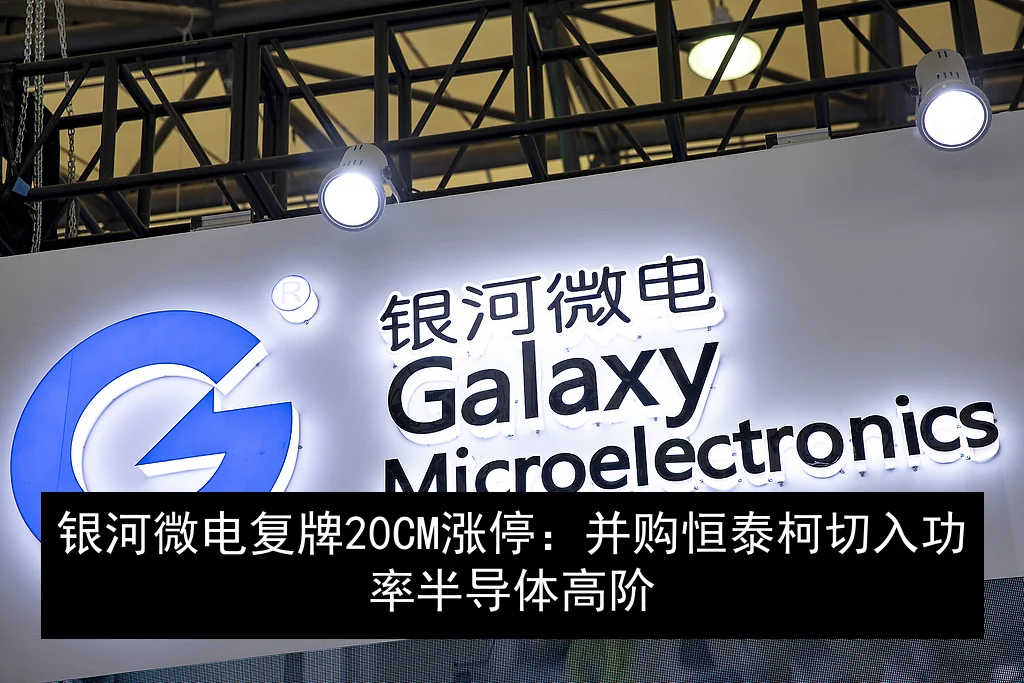
Behind the '20CM' Limit Up of Yinhe Microelectronics: Acquiring Hengtaike into High-End Power Semiconductors
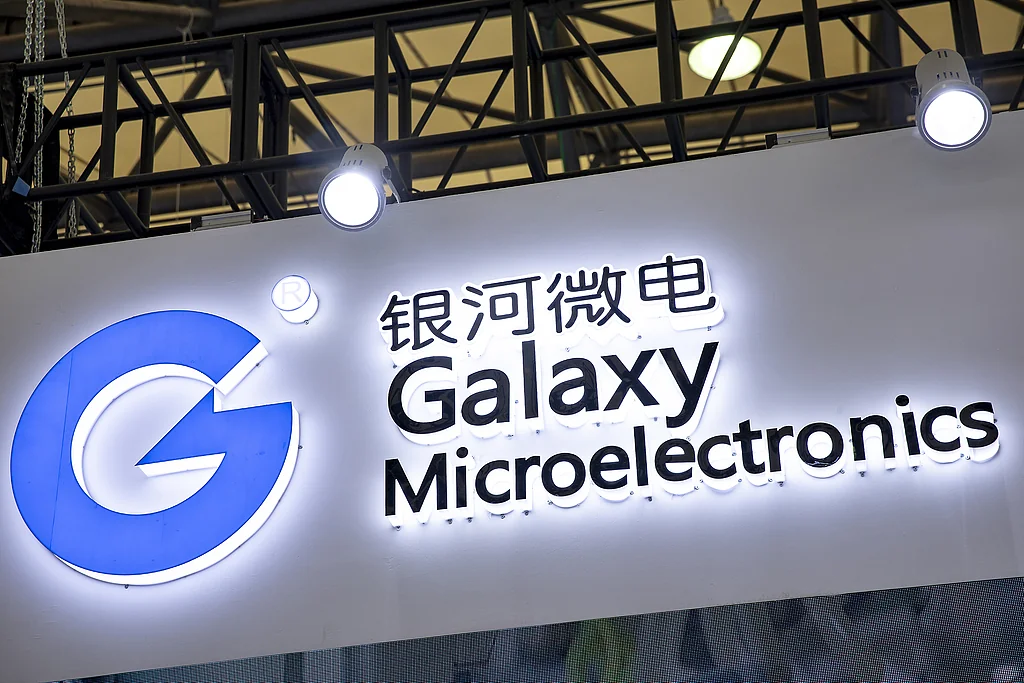
After a two-week trading halt, Yinhe Microelectronics (688689.SH) resumed trading today after disclosing its restructuring plan. The company plans to acquire 100% of Hengtaike Semiconductor through share issuance from three shareholders—Shanghai Zhingneng Hengxin Industrial Electronics Co., Ltd., Gongqingcheng Mingnuo Investment Partnership (Limited Partnership), and Tianmuyulin (Shanghai) Technology Co., Ltd.—and simultaneously raise matching funds.
On the first day back, the stock hit a '20CM' limit up, closing at 55.88 yuan per share, with a market cap of approximately 7.2 billion yuan, and a turnover rate of only 1.21%. The buy-order queue reached 291 million shares, 185 times the day's volume, representing over 1.5 billion yuan in pending orders.
Against the backdrop of a high-cycle in the power semiconductor industry, the market reacted positively to Yinhe's move to enter the mid-to-high-end power semiconductor segment through acquisition. However, the deal faces multiple controversies, including insider trading suspicions due to abnormal price increases before the trading halt, uncertain valuation of the target, and potential significant goodwill pressure in the future.
Post-Acquisition Integration Challenges: Product Lines, Customer Management, and Core Team Retention
Jiang Han, senior researcher at Pangu Think Tank, pointed out that the biggest integration challenge is fine management of product lines and customers. After integrating Hengtaike's products, the portfolio will exceed a thousand SKUs, significantly increasing complexity in customer management and capacity allocation.
Second, core technology is highly tied to the R&D team. Without reasonable equity incentives and non-compete clauses, there is a risk of technology loss and goodwill impairment.
Filling the Gap: Mid-to-High-Voltage Power Semiconductor Leap Still Faces Barriers
Yinhe's acquisition of Hengtaike is a complementary industrial consolidation. After completion, the company is expected to quickly fill its gap in mid-to-high-voltage power semiconductor technology, filling a high-end product void and improving the overall product matrix.
For a long time, Yinhe's core business has been low-voltage small-signal devices and low-voltage power devices, while its layout in high-voltage MOSFETs, IGBTs, and SiC has been slow. Disclosed technology breakthroughs have not translated into actual results, limiting penetration into high-end markets like automotive electronics.
In industry comparison, global leaders have built full-chain closed loops covering materials, processes, and manufacturing, while domestic IDM leaders have achieved mass production of high-voltage MOSFETs and IGBTs. Headroom for latecomers is narrowing.
In this context, Hengtaike is seen as a key breakthrough for Yinhe. According to the restructuring plan, Hengtaike is a national-level 'Specialized and New' 'Little Giant,' focusing on R&D and sales of power semiconductor products for applications including power supplies, lithium battery protection, brushless motors, new energy, and E-car (OBC, electronic control). The company holds medium-voltage SGT MOSFET and high-voltage SuperJunction technology, achieving domestic top-tier level in 150V-200V mid-to-high-voltage SGT MOSFETs, enabling pin-to-pin replacement of Infineon's medium-voltage series.
The deal reflects a 'Fabless design + IDM manufacturing' integration approach: Yinhe has mature chip manufacturing capacity but lacks high-end design capability, while Hengtaike has top design technology but no own fabs. Business-level complementarity exists, but synergy realization depends on subsequent integration.
Valuation and Funding Pressure: Deal Price Undisclosed, Goodwill and Integration Risks Highlighted
Acquisitions can shorten development timelines for mid-sized firms. Institution insiders also believe integration risk remains a major challenge, including differences in organizational structure, corporate culture, team integration, and R&D paths. Only through fine management to reduce internal friction can synergy be achieved.
Yinhe's disclosure notes risks include Hengtaike facing dual competitive pressure from global giants and domestic upstarts. If the global macro economy weakens, downstream demand growth slows, or the semiconductor industry experiences a deep, sustained downturn, Hengtaike's operating results will be affected.
A key uncertainty is that the final valuation and consideration have not been disclosed. As of the plan signing date, auditing and valuation of Hengtaike are still in progress, and the transaction price has not yet been announced. The share issuance price for the acquisition is set at 28.48 yuan per share, with a 36-month lock-up period. Matching funds will be used for transaction taxes, intermediary fees, target project construction, and supplementing working capital and repaying debt.
Unaudited data show that Hengtaike's revenue for 2024 and 2025 was 206 million yuan and 193 million yuan, respectively; net profit attributable to parent was 32.2325 million yuan and 35.7180 million yuan, showing stable growth. As of end-2025, Hengtaike's parent equity was only 416 million yuan, indicating a significant asset-light profile.
Regarding valuation, Jiang Han believes that for asset-light semiconductor design firms, the core value lies in intangible assets like IP cores and R&D teams. Traditional PE/PB models may fail due to earnings volatility and upfront investment characteristics. A reasonable valuation can be cross-verified using multi-stage DCF supplemented by relative valuation, incorporating factors like technology iteration risk and downstream application cyclicality.
From the listed company's fundamentals, Yinhe's net profit attributable to parent declined year-on-year from 2022 to 2023. In 2024, revenue was 909 million yuan, up 30.75% YoY, and net profit was 71.8742 million yuan, up only 12.21%. In 2025, revenue was 1.05 billion yuan, up 15.46%, and net profit was 79.9047 million yuan, with growth slowing to 11.17%, indicating momentum weakening.
On the cash side, Yinhe's cash and equivalents as of end-2025 was only 137 million yuan, down 44.65% YoY. Operating cash flow net inflow was 43.7501 million yuan, down 34.73% YoY, impacted by longer receivables and increased inventory.
Market analysts note that if the acquisition creates high premium and leads to significant goodwill, subsequent impairment will erode earnings if performance falls short. The deal's ability to deliver cyclical gains depends on consolidation timing and synergy realization.
Additionally, abnormal share price movements before the trading halt have raised concerns about insider information leakage. On June 10-11, Yinhe's stock surged nearly 19% over two days with high volume, while the semiconductor index rose only 2.70%. The company clarified that there was no insider information leakage or insider trading violations.